Are Microneedling Cartridges Reusable? Safety Facts
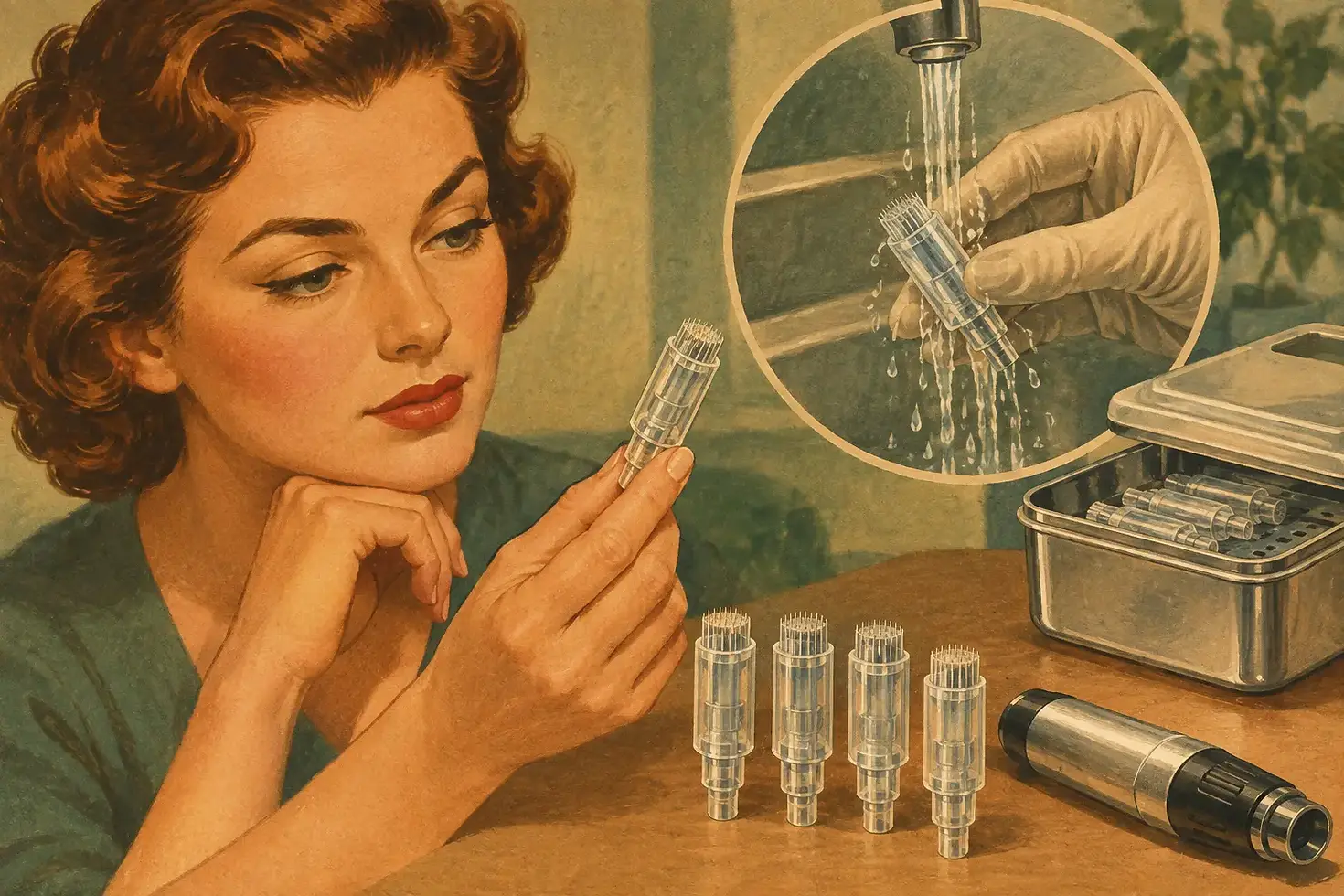
A microneedling cartridge may look clean after a treatment, especially when there is no visible blood or residue. That appearance can be misleading. Are microneedling cartridges reusable? No. A needle cartridge is designed for one treatment session only and should be disposed of immediately afterward as a sharps item.
This is not simply a matter of being extra cautious. Microneedling intentionally creates controlled microchannels in the skin. The cartridge comes into contact with skin cells, body fluids, skincare product residue, and microorganisms that cannot reliably be seen. Using a fresh, sterile cartridge for every service protects the client, supports better healing, and reflects the standard of care expected in a professional treatment setting.
Why Microneedling Cartridges Are Single-Use
Microneedling pens use a disposable cartridge containing a cluster of very fine needles. As the pen moves across the skin, those needles rapidly enter and exit the surface. Even when a treatment is gentle and there is little redness, the cartridge has been exposed to biological material.
A cartridge cannot be considered sterile after it has been opened and used. Rinsing it, wiping it with alcohol, soaking it in disinfectant, or spraying it with a surface sanitizer does not restore the original sterile condition. These methods cannot guarantee that microscopic material has been removed from every area around the needles and within the cartridge housing.
Needles can also become dull or slightly bent during use. The change may not be visible to the eye, but it can affect how smoothly the needles move through the skin. A fresh cartridge helps create more even microchannels with less unnecessary dragging or irritation.
For professionals, the rule is simple: open a sterile, sealed cartridge in preparation for the client’s treatment, use it once, and dispose of it safely after the session. The cost of a new cartridge is part of providing a hygienic, responsible service.
Can You Reuse a Cartridge on the Same Person?
No. Reusing a cartridge on the same person at a later date is still not recommended. Skin bacteria can remain on the cartridge, and product or tissue residue may dry in areas that are difficult to access. Storing the cartridge for a future appointment also creates an opportunity for contamination between treatments.
Some people assume that personal use changes the answer. While there is no risk of passing microorganisms from one client to another when the user is the same person, there is still a risk of introducing bacteria back into the skin, causing irritation, or working with damaged needles. The fact that a cartridge belongs to one person does not make it sterile after use.
A professional should never save an opened cartridge for a client, even if the client requests it. Clear infection-control practices protect both the client and the practitioner, without exceptions or guesswork.
What Can Be Cleaned and Reused?
The reusable part of a microneedling pen is the device body, not the needle cartridge. The pen should be cleaned and disinfected between clients according to the manufacturer’s instructions. This usually means carefully wiping external surfaces while preventing moisture from entering the motor or charging port.
The exact cleaning process depends on the device. A professional-grade device should always be used as directed in its official instructions for use. Trying to sterilize parts that are not intended for sterilization can damage the device or compromise its function.
The treatment environment matters as well. Hands should be washed, treatment surfaces disinfected, and appropriate protective practices followed. A new cartridge alone is not a complete safety protocol. It is one essential part of a clean, controlled treatment process.
Why Alcohol Does Not Make a Cartridge Safe to Reuse
Alcohol is useful for disinfecting certain hard, nonporous surfaces when used correctly. It is not a substitute for sterilization, and it is not a reliable way to prepare a used needle cartridge for another microneedling treatment.
There are practical limitations. The needle assembly contains tight spaces, small openings, and internal surfaces that cannot be properly inspected after cleaning. Alcohol may not reach all areas, and it does not remove all protein material or debris. Repeated exposure to liquid can also affect the cartridge components.
Autoclaving is not an answer either unless a manufacturer specifically identifies a component as reusable and validated for that process. Most disposable pen cartridges are not made for autoclave sterilization. Heat and pressure can deform plastic parts, weaken seals, or alter the needle assembly. A cartridge that has been cleaned or sterilized at home may look acceptable while no longer performing as intended.
Reuse Can Affect Both Safety and Results
Microneedling is often chosen to support concerns such as uneven texture, the look of enlarged pores, fine lines, acne scarring, and overall skin renewal. Results depend on many factors, including skin health, needle depth, technique, post-treatment care, and an appropriate treatment schedule.
Using a compromised cartridge adds avoidable variables. Dull or damaged needles may create more surface trauma instead of consistent, controlled channels. Contamination can contribute to prolonged redness, breakouts, inflammation, or infection. A poor healing response may delay the next treatment and work against the calm, supported skin recovery that clients want.
This is especially relevant for clients with active acne, rosacea tendencies, eczema, impaired skin barriers, or a history of post-inflammatory hyperpigmentation. These concerns do not automatically rule out every form of microneedling, but they do call for careful assessment and a personalized approach. A practitioner should decide whether treatment is appropriate that day, rather than treating every concern with the same protocol.
What Clients Should Look For During a Professional Treatment
A trustworthy microneedling appointment should feel organized and transparent. You should see the cartridge package opened before your treatment begins. The practitioner should use a cartridge compatible with the device, follow the device manufacturer’s guidance, and dispose of the used cartridge after the procedure.
It is appropriate to ask questions before treatment. You may ask whether the cartridge is new, how the pen body is cleaned, what needle depth is being used, and what aftercare is recommended for your skin. These are not difficult questions. They are sensible questions from someone who cares about their health and results.
A consultation should also cover your current skincare routine, recent cosmetic procedures, medications, skin sensitivity, and any active irritation or infection. For example, strong exfoliants or retinoids may need to be paused as advised before treatment. After microneedling, the skin needs a period of gentle care, sun protection, and avoidance of unnecessary heat, friction, or potentially irritating products.
At IFAA Beauty Care, microneedling is approached as a professional skin service, not a one-size-fits-all procedure. The device, cartridge, skin preparation, needle depth, and aftercare should all be considered in relation to the individual sitting in the treatment chair.
A Note for Professionals Buying Cartridges
For estheticians and other qualified professionals, selecting the correct cartridge is as important as using it only once. Cartridges should be made for the specific device model and sourced through an authorized channel whenever possible. A cartridge that appears to fit may not function properly, may sit loosely in the pen, or may not meet the same manufacturing and packaging standards.
Before use, inspect the sealed package. Do not use a cartridge if the seal is broken, the package is damaged, the product is expired, or the needle assembly appears irregular. Keep unopened cartridges in a clean, dry place according to the manufacturer’s storage guidance.
After treatment, place the used cartridge directly into an appropriate sharps container. Do not leave it on a tray, recap it, or place it in regular waste. Follow local requirements for sharps disposal in your practice area.
The Safer Choice Is Also the Professional Choice
Microneedling can be a valuable part of a thoughtful skin plan when it is performed with proper training, suitable equipment, and careful hygiene. Reusing cartridges may seem like a way to reduce waste or expense, but it introduces risks that are not worth taking.
If you are considering a treatment, look for a practitioner who welcomes questions, assesses your skin carefully, and opens a new sterile cartridge for every session. Healthy skin responds best when the details are handled with care.


Comments